



Partnerships with renowned chefs have become a defining pillar of airline and rail catering strategy. They shape menus, elevate brand identity, and reframe how passengers experience food at altitude, on rail and at sea.
In the Onboard Hospitality Awards 2026, the Best Chef Collaboration category reflected a sector now firmly committed to culinary partnerships that go far beyond signature dishes. From Michelin-starred menus in First Class cabins to regional chefs reinterpreting national identity for rail travellers, these collaborations are now central to how operators compete on experience.
Culinary identity
Airlines are increasingly using chef collaborations not just to provide quality and variety, but to communicate authenticity, place, and prestige.
Take Qatar Airways’ Guest Chef Programme, for example. The airline has partnered with more than 10 internationally acclaimed chefs, combining Michelin-starred expertise with culturally rooted cuisine to deliver what it positions as ‘restaurant-level dining in the sky’. This approach spans continents and culinary styles, from French refinement to Afro-fusion and modern Asian cuisine, reinforcing the airline’s ambition to make onboard dining a defining element of its luxury proposition.
The concept considers variety, localisation and emotional resonance. Each chef contributes a distinct culinary voice, enabling airlines to rotate menus that feel both globally relevant and locally grounded.
Beyond its Guest Chef Programme, the airline continues to expand its partnerships with globally recognised culinary figures.
Recent collaborations include celebrated chefs such as Yannick Alléno, whose menus extend from First and Business Class cabins into premium lounges, and whose work reflects a broader ambition to fuse French culinary artistry with international influences.
Alongside these headline names, Qatar Airways has also worked with regional chefs such as Noof al Marri, who brings contemporary Qatari cuisine into Business Class, reinforcing a sense of place and national culinary identity for passengers travelling through Doha.
Rather than one-off menu design projects, Qatar Airways has built an ongoing ecosystem of culinary partners, enabling continuous refreshment of its onboard offer.
Haute cuisine at altitude
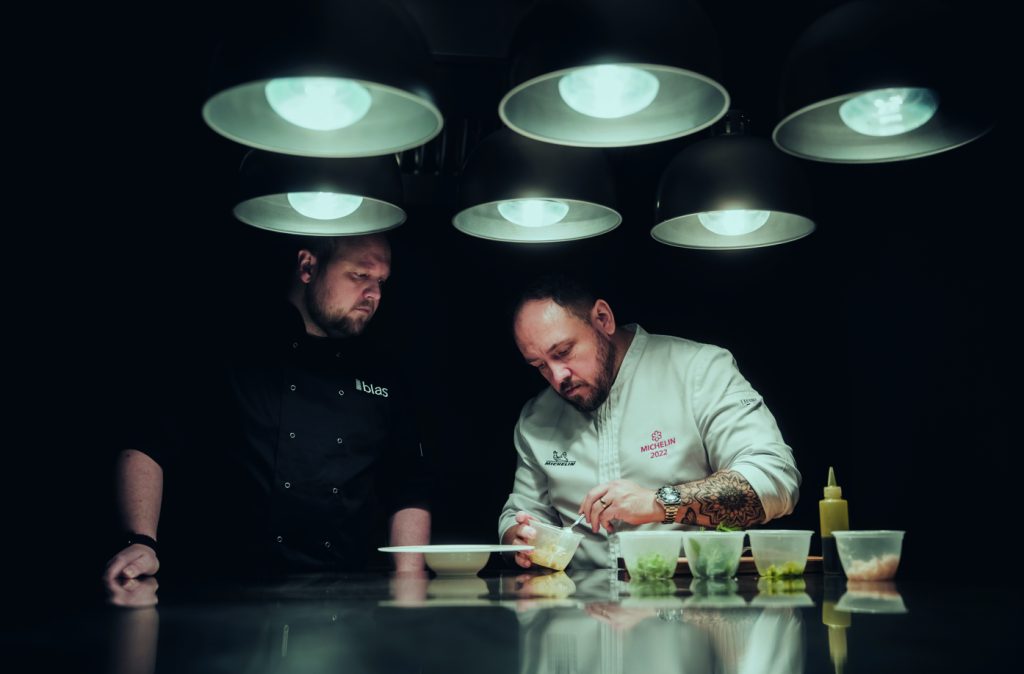
Meanwhile, Air France’s approach to chef collaboration is rooted in haute cuisine tradition, with a strong emphasis on French culinary heritage and seasonal fine dining. Its La Première menus, created in collaboration with chefs such as Anne-Sophie Pic and others, have long positioned the airline as a benchmark for luxury inflight dining.
Since November 2025, Anne-Sophie Pic has unveiled new dishes specially designed for La Première guests on departures from Paris. The collaboration celebrates ten years of partnership between the most Michelin-starred female chef in the world and Air France. In addition, Claire Heitzler, Gault & Millau’s 2013 Pastry Chef of the Year, rounds off the meal with desserts.
National talent
In contrast, Air Canada has built its chef collaboration strategy around national identity and regional diversity.
The airline’s culinary programme brings together some of Canada’s most respected chefs, including Jérôme Ferrer, David Hawksworth, Vikram Vij and Masaki Hashimoto, alongside leading sommelier Véronique Rivest.
Rather than focusing solely on global culinary icons, Air Canada’s approach emphasises storytelling through Canadian cuisine. Each chef represents a different facet of the country’s culinary landscape, from West Coast seafood to modern Indian-Canadian fusion – creating a menu programme that reflects both geography and multicultural identity.
This strategy aligns closely with broader industry trends: passengers increasingly value authenticity and provenance, particularly in premium cabins. For Air Canada, chef collaborations are not just about elevation, but about representation.
Cultural storytelling
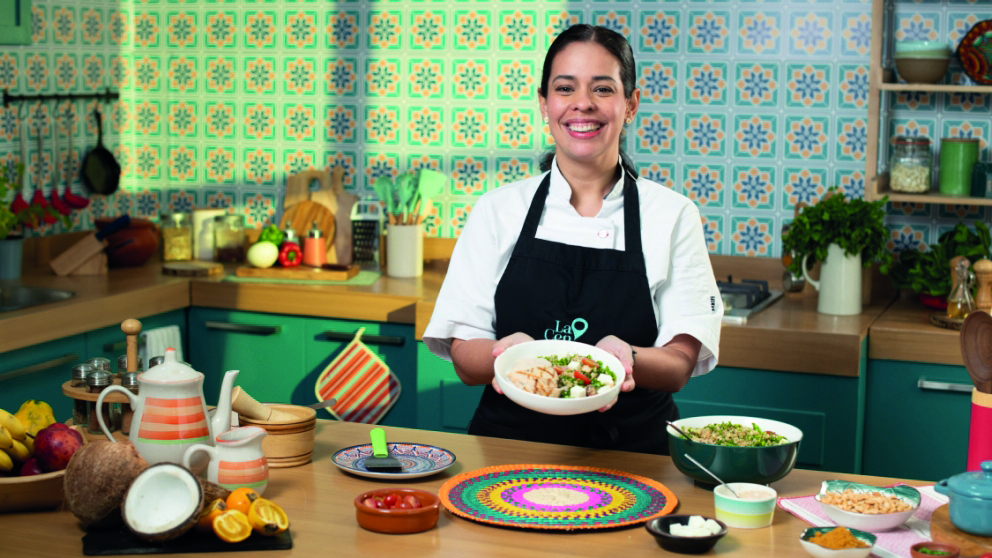
For LATAM, chef collaboration has become a powerful tool for cultural storytelling across Latin America.
Recognised as a Winner in the Onboard Hospitality Awards for its “Sabores que Transportan” and “Sabor a Brasileira” female chef collaborations, LATAM’s approach places emphasis on regional culinary identity and the empowerment of local chefs.
Rather than importing global celebrity chefs, LATAM’s strategy highlights local talent and culinary heritage. This allows the airline to present onboard dining as a journey through Latin America itself – where each dish reflects a different cultural origin, ingredient base or culinary tradition.
This localisation strategy is particularly powerful in Economy and Premium Economy cabins, where differentiation is often harder to achieve. By embedding chef collaboration into more accessible cabin classes, LATAM extends culinary storytelling across the full passenger journey.
Rail catering, redefined
Chef collaboration is not limited to aviation. For example, UK rail operator Transport for Wales demonstrates how rail operators are also embracing culinary partnerships to elevate onboard hospitality.
Recognised as Highly Commended in the awards for its collaboration with chef James Sommerin, Transport for Wales has helped redefine expectations of rail food service in the UK. Sommerin’s influence brings a fine dining sensibility to a ‘traditionally utilitarian’ environment, elevating menus and introducing greater emphasis on seasonality and quality.
This reflects a wider shift in rail catering from convenience-led offerings to experience-led dining. As rail operators compete for passenger loyalty, food and beverage has once again become a key differentiator.
Culinary innovation at scale
Behind many of these collaborations sits gategroup. The caterer plays a central role in translating chef creativity into operational reality. Its work with airlines such as Qatar Airways and others focuses on menu design, sourcing, sustainability and scalable production.
The company’s model is built around culinary co-creation – working directly with chefs and airline teams to ensure that dishes can be consistently reproduced across global networks without losing integrity or quality. This includes the development of culinary studios, where chefs and catering experts collaborate on recipe development, testing and refinement before onboard deployment.
The caterer has recently implemented a full-service concept with Lufthansa.
Looking ahead
Chef collaborations have become one of the most influential forces in onboard hospitality. They bridge the gap between aspiration and execution, storytelling and service, creativity and consistency.
Collaborations are no longer isolated marketing initiatives or prestige-led menu launches, but rather structured systems of innovation, integrated into airline identity, operational strategy and the passenger experience.
Looking at the examples from this year’s Onboard Hospitality Awards, three key trends stand out: First, scale and continuity. Airlines such as Qatar Airways are moving from individual chef partnerships to full culinary ecosystems. Second, localisation. Carriers like Air Canada and LATAM are using chefs to reflect national and regional identity, rather than global uniformity. Third, operationalisation. Partners like gategroup are ensuring that culinary creativity is matched by consistency and deliverability at scale.
As the industry continues to evolve, the most successful collaborations will not simply ask what passengers are eating, but why it matters, who created it, and what story it tells along the journey.
If you have a chef partnership worth shouting about, enter the Onboard Hospitality Awards 2027 from September 1 2026.


