


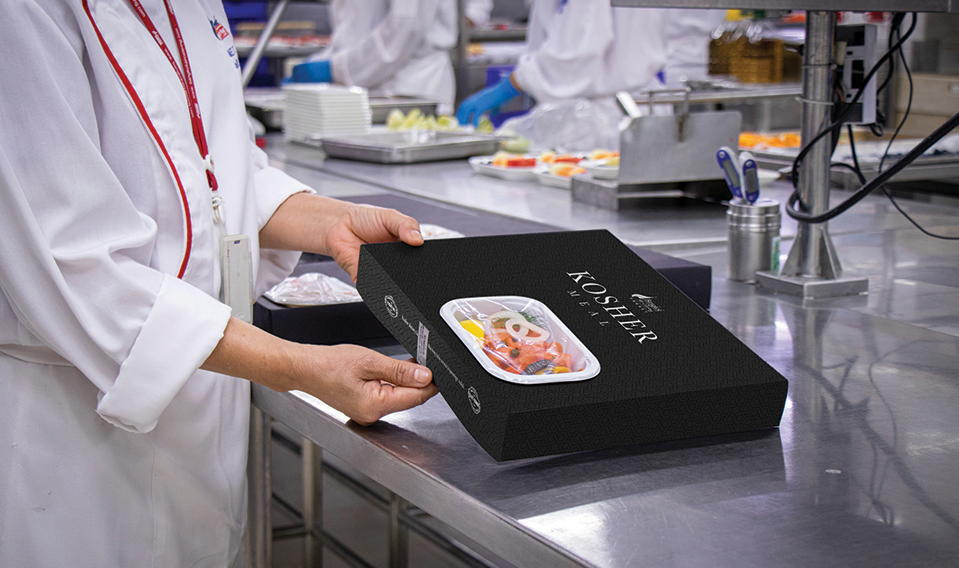
Packaging can make or break your inflight catering. No matter how perfect a meal or snack may taste, if the packaging fails, your delivery to the passenger risks being a total disaster.
Mohammad Farran, General Manager of Bangkok Air Catering (BAC), calls packaging the ‘silent architecture’ of meal presentation, and the Snackboxtogo team calls it the ‘silent partner’ of inflight dining. Certainly suppliers are increasingly keen to shout about the added value good packaging can deliver.
Stepping up

Sleek designs, innovative materials, and functional features have to converge to ensure meals are not only preserved in transit but also presented with panache. Whether it’s eco-friendly containers for guilt-free indulgence or compartmentalised trays for a symphony of flavours, the best packaging seamlessly integrates aesthetics and functionality, enhancing the overall dining experience.”
Richard Wake, Insight and Innovation Director at En Route International, agrees that packaging presentation is key. “The aesthetic function of food packaging can play a crucial part in the visual experience,” he says.
“Elements of surprise and delight can be designed into the packaging to help accentuate the sensory indulgence of the food – whether that be how a product is unboxed or how the food is unveiled. There are many opportunities to excite passengers in this way and expand storytelling. Packaging can both complement the visual experience and protect the product.
“As product quality increases, often product fragility increases too so it is critical to think about how a product is packed, managed through the supply chain, delivered into the galley, and utilised by the cabin crew, so it arrives to the passenger in its optimum condition. This is as true in Economy as it is in First class.”
Serve up a surprise

Wake believes packaging can help surprise the passenger and give them a unique experience. He adds: “It’s important to create memorable passenger experiences by infusing them with a sense of emotion through innovative combinations of flavours and unconventional contexts. Being able to adapt and invent new experiences will also be key to retaining passengers’ attention and building brand awareness and will be particularly relevant as younger passengers become the dominant flying demographic.”
Marc Warde, Special Meal Program Director at Foodcase, agrees packaging should be designed with both functionality and aesthetics in mind. He says: “Packaging should not only maintain freshness and temperature but also complement the visual aesthetics of the meal. Transparent or windowed packaging can allow passengers to see the contents of their meal, enhancing anticipation and visual appeal. Experimenting with innovative packaging designs, such as compartmentalised trays or eco-friendly materials, can also enhance the overall dining experience.”
Packaging for the planet
Environmental concerns are also driving changes in packaging. The Snackboxtogo team says: “While ingredients may take centre stage, packaging plays a silent yet crucial role in preserving the integrity of the meal and enhancing its presentation. Packaging also has to support growing environmental concerns so it is imperative for airlines and food providers to prioritise eco-friendly solutions without compromising on quality or aesthetics. This means embracing innovative packaging alternatives such as compostable materials and minimalistic designs, and making conscious choices in packaging, focusing on mono materials and replacing plastics with paper or cardboard. We are also testing other materials like elephant grass, sugar cane and bamboo.”
Quality communication
Montevibiano insists packaging also signposts consumers to the quality of the product within. Known for its olive oils, it is now working with brand partners on new pizza, pasta, gelato and tiramisu products identified as authentically Italian. Claudio Castigloni, Brand Manager, says: “We have invested in top end brands so we can influence and control the whole specification of the product including the packaging so that even in Economy it is possible to serve products that look important and special. If you are using the best ingredients and have a quality product, the packaging must reflect that quality, you can’t take short cuts.”
He contends that any cost implications of this strategy are easily justifiable and adds: “If you trap people on an aircraft they want to see you have thought about how you’re going to look after them. Packaging needs to show you are proud of the product you are providing.”
He adds: “Packaging can give you the opportunity for two ‘wow’ factors in one product – sight and taste. For example, our new Bellino cocktail comes in a luxury champagne style bottle. In this way packaging can send out a message that this is a thoughtful, classy product you are proud to serve, and that conveys a value to the consumer.”
Salim Hazife, Managing Director at Foodfolk, insists: “Packaging is important but not the whole story. A very nice looking box will only be a disappointment if it has a lack-luster product inside. Packaging should complement an already great product.”
Perhaps Farran sums it up best: “Inflight dining isn’t just about sustenance – it’s an experience that engages all the senses, from the moment you lay eyes on the meal to the final, satisfying bite. As airlines continue to adapt to the changing needs of passengers, one thing is certain: inflight dining will always be a journey of sensory delight, where every bite tells a story.


